

Description
Read more about the Product Options, click here
Art Nouveau Poster Collection
Step into the elegance of a bygone era with our Art Nouveau Poster Collection. Inspired by the sinuous lines and ornamental grace of the early twentieth century, this range celebrates decorative advertising at its most poetic.
Echoing the spirit of masters such as Alphonse Mucha, each artwork features flowing forms, ornate typography, and intricate botanical detail. Rich, layered colour palettes and softly romantic figures create pieces that feel both historic and strikingly relevant.
Ideal for living rooms, hallways, cafés, studios, or curated gallery walls, these prints introduce vintage European character with quiet confidence. They do not shout. They linger. They invite a second look.
Created for admirers of heritage design and classical illustration, this collection turns your walls into a tribute to craftsmanship, history, and decorative beauty that refuses to fade.
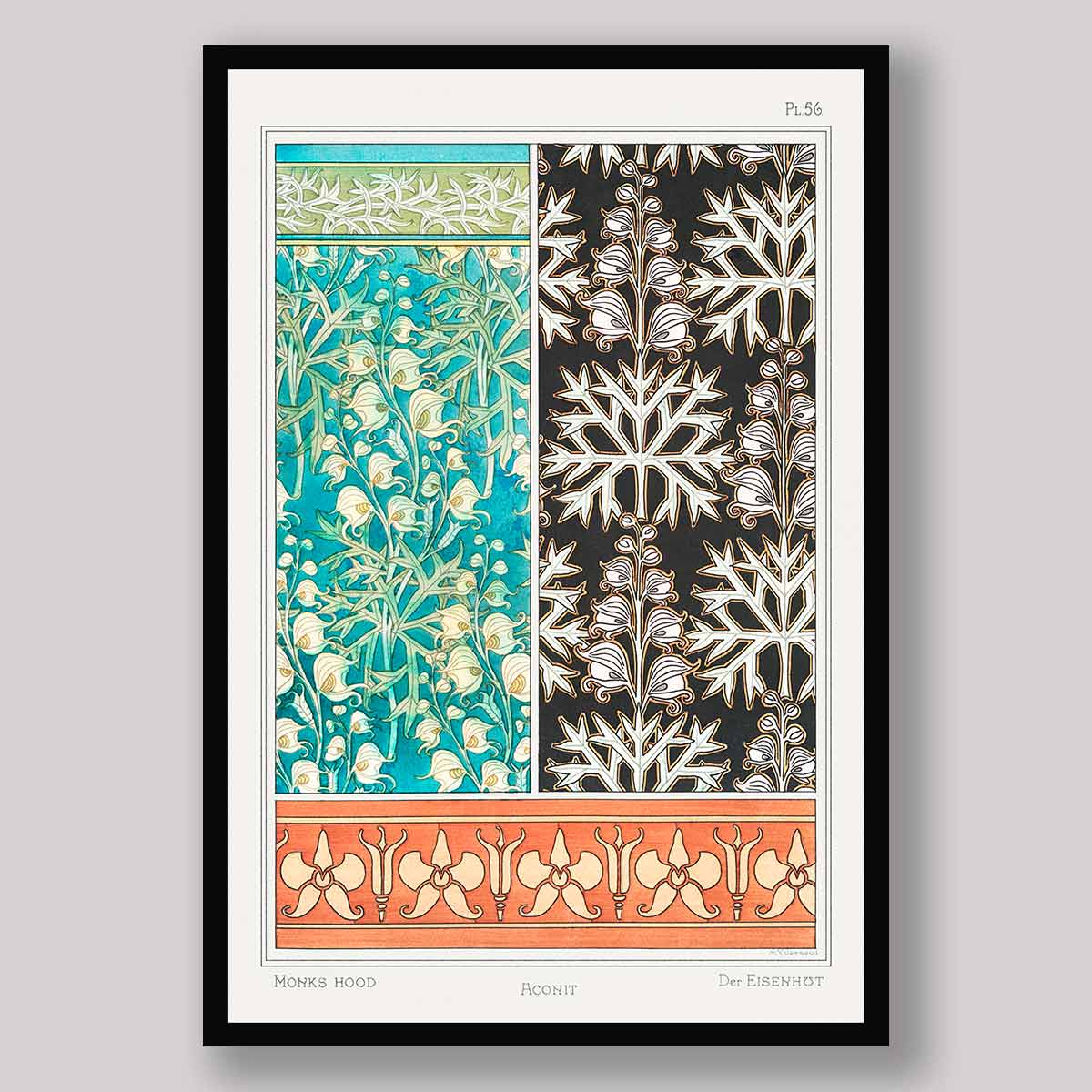
“Aconite (Monkshood)” from La Plante et ses Applications Ornementales (1896)
Is an illustration by Maurice Pillard Verneuil, a prominent French artist and designer closely associated with the Art Nouveau movement. This specific work showcases Verneuil’s detailed and stylized representation of Aconite, also known as Monkshood, a plant often associated with its striking blue or purple flowers and its toxic properties.
La Plante et ses Applications Ornementales was a series of botanical illustrations focused on the decorative potential of plants, designed to inspire artists, architects, and designers to use natural forms in their work. Verneuil’s contribution to this series is marked by his use of intricate linework, bold color contrasts, and a strong focus on the organic beauty of the plant.


